
-

Your homepage: A leading indicator of social success
Social networks have become extremely important referral sources for many online media outlets. In light of Facebook’s recent algorithm changes, some digital publishers have become laser-focused on how much traffic the social media giant is driving (or not driving) to their posts. And according to new research from Parse.ly, the homepage is one of the…
-

How One Media Company Succeeded Without a Dev Team
Publishers and media companies get attention when they invest in technology. However, for every headline written about The Washington Post under Jeff Bezos, The New York Times‘ Innovation Report, and even TRONC, are there just as many untold stories about companies who chose to rely on outside expertise? We explored how, for one media company,…
-

Audience Analytics: A Thing of the Past (and the Future)
Why do audiences matter? It’s hard to think of a time when the average American wasn’t equipped with a laptop or a smartphone: 68 percent of U.S. adults have a smartphone and 73 percent have a desktop or laptop computer. As a matter of fact, 2015 was our most plugged-in year ever — bringing with…
-

Case Study: Greentech Media on Monetizing Its Digital Audience
A growing digital audience, shrinking digital revenue. Sound familiar? It was the reality that business-to-business renewable energy site Greentech Media faced in early 2015. Instead of trying to get by on tighter margins or cutting editorial staff, though, Greentech Media, found a new way to monetize the readers already on its site. Our latest case…
-
Virtual Reality News: Not All Fun and Games
An interview with Emmett Butler, Parse.ly Software Engineer. We’re all looking for it. The hot new thing. The jackpot that will set our monetization woes to rest. The Pokemon Go of digital news. And as newsrooms pursue new ways to innovate — from going all-video a la Tronc to going all-angles with 360-degree recording…
-

Arming Students with Data via Parse.ly’s University Partnerships Program
The idea for Parse.ly’s University Partnerships Program began with a simple question: What would happen if we gave journalism students full access to audience data? After two semesters of working with journalism classes and student-run publications to find the answer, we’re pleased to report today on some of the students’ findings. From creative insights on…
-

Media That Moves Us
At Parse.ly, we’re used to measuring the impact of media with metrics. Page views, shares, and engaged minutes are our usual currency for understanding how audiences respond to the content they read, watch, and use every day. For some journalists and creatives, adding numbers to the equation removes the often inexplicable emotional reaction that consumers…
-

Would a Page-View-Seeking Robot Write Less About Trump?
A couple weeks ago, Parse.ly published a blog post on why the media’s fixation on Trump is not supported by page view data. This post generated a good bit of criticism and controversy that I’d like to address here by untangling a couple of ideas and performing a more rigorous statistical analysis on the data.…
-

3 Ways Newsrooms are Sharing Content Analytics with Readers
Analytics in the newsroom have helped journalists and journalism organizations uncover surprising things about their readers — but can analytics help readers uncover more about themselves? Here are three examples of how newsrooms can use content analytics information as more than an exclusively internal source of information. Making the Most of Most Popular Lists Across…
-
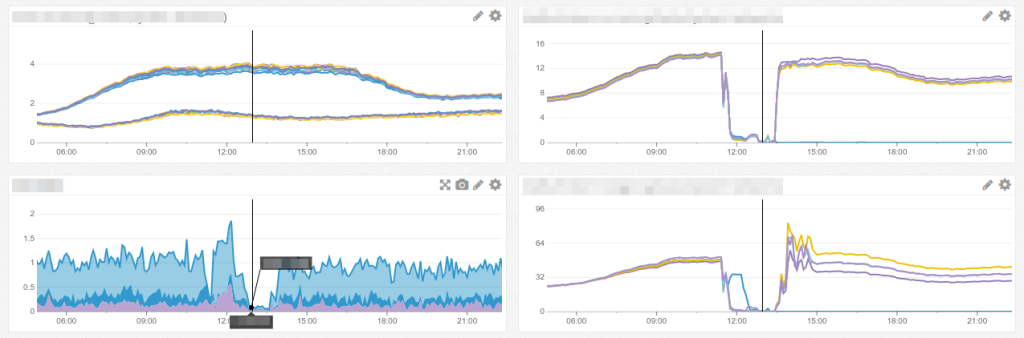
Postmortem of Parse.ly’s Real-Time Outage (2016-06-09)
On Thursday, June 9, 2016, Parse.ly experienced a real-time data outage that lasted approximately 3 hours. No customer data was lost, but this did result in a delayed delivery of data from that 3-hour window. Here, we will explain exactly what went wrong and what we did to address it. A Sudden Downtime at 11:30am…