
-

“Role of Journalism” Overtakes Monetization as the Media Industry’s Priority in 2017
What will 2017 bring for journalists? As part of a recent survey of more than 100 digital media professionals, Parse.ly found that this question is top-of-mind for digital media professionals, who believe that the role of journalism in society will be the digital media industry’s primary focus in the coming year. Sachin Kamdar, co-founder and…
-

Creating a Data-Driven Top 10 List That Impacts Content Strategy
Some of my favorite top 10 lists reflecting on the past year pull back the curtain on which metrics each publication used to develop their rankings. Two Parse.ly clients shared which metrics they used to create lists of top posts in 2016. Scientific American found their Most Popular Science Stories of 2016 by looking at…
-

Video Drives Increased Engagement for Publishers on Instagram
With more than 600 million monthly active users, Instagram has become a social behemoth on the web. However, it hasn’t yet become a huge traffic referrer for publishers and brands. But, TechCrunch’s Director of Audience Development, Travis Bernard, predicts that Instagram will outperform platforms like Twitter and LinkedIn as a marketing channel in 2017. “Initially,…
-

Media Predictions for 2017 Based on Data
This is the time of year that everyone starts making predictions. But as Nate Silver proved, we’re not actually very good at making predictions unless we’re using data. So this year, I’m putting Parse.ly’s data to work so that we can make some predictions of our own. The homepage will make a comeback. The top…
-

Where Is Your Site Traffic Coming From?
As of November 2016, Google and Facebook drove around 80 percent of all identifiable external traffic to digital publishers in Parse.ly’s network. This has been a concern for online media, who are impacted by even the smallest changes implemented by these sites — but may not have the tools to understand how or why. Just…
-
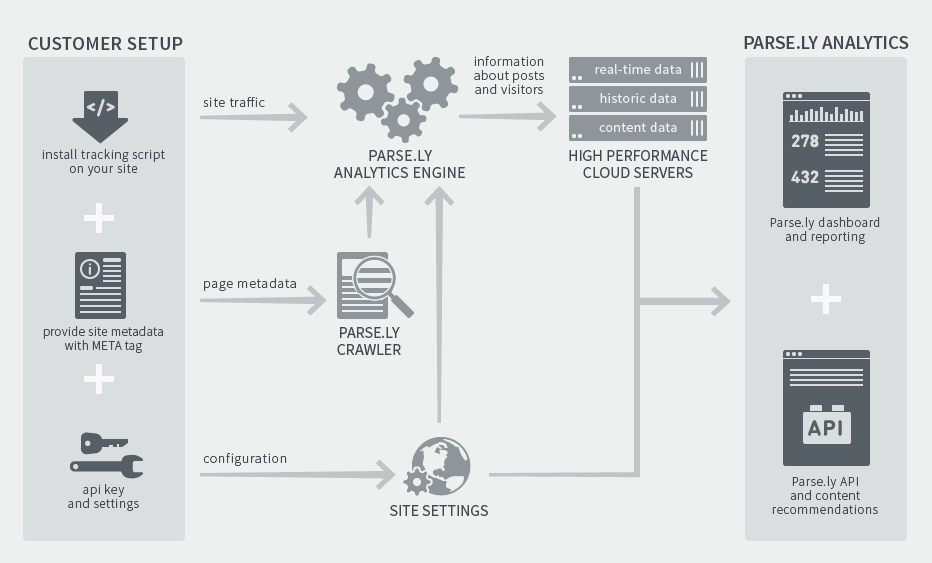
How metadata supercharges analytics in Parse.ly
Parse.ly tracks a number of directly-measured metrics from websites, such as views, visitors, time, and shares. In addition to this, Parse.ly tracks “page metadata” using one of several content management system (CMS) integrations. In fact, page metadata is Parse.ly’s “secret weapon” that supercharges the way its analytics dashboard works, so that all of the data…
-
Four Rules for Creating Comments Sections You Won’t Want to Avoid
Do you read the comments? If you hesitate to wade in, especially on a piece you’ve written, you’re not alone. Negative voices tend to get elevated, while other diverse and measured voices are shouted down; it’s not a place where you’d want to spend your time. However, despite the prevalence of hostility and bad behavior,…
-

Here’s Why Creative Types Might Be Better at Data Interpretation Than Analysts
Parse.ly is headquartered in New York City, which boasts one of the most comprehensive subway systems in the world. And while getting around on the subway might be confusing at first, the city provides a pretty detailed map to help travellers find their way. The map, itself, is an artistic interpretation of each subway line…
-

Dig Deeper: Using Data to Ask Better Questions
“We interpret data differently based on where we stop asking questions.“ – Kelsey Arendt, customer success manager, Parse.ly We’re a data-driven bunch here at Parse.ly, so we rely on our own analytics dashboard to create a purposeful blog content strategy. As we prepare for 2017, we’re looking back at our data and starting to ask…
-
How to Use Audience Data to Write a Great Post
Data is a powerful way to translate your audience’s preferences into personalized and engaging stories and experiences. Analyzing audience data allows you to understand the recent transactions that have occurred between your audience and your work, and it allows you to take in all kinds of interesting information that will help you to engage your…